
Art, Advocacy, and Action: Dr. Shanthipriya Siva’s Journey
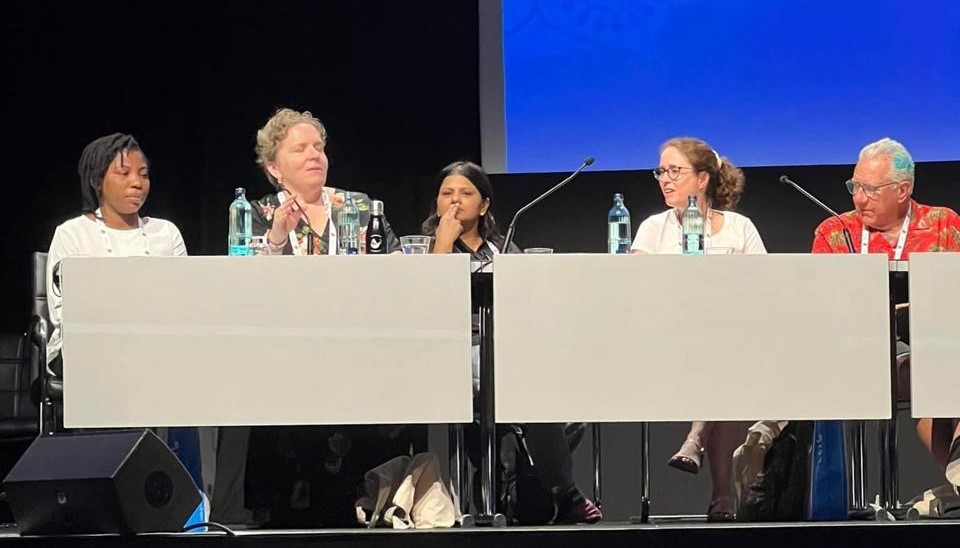
Shrilaxmi: Can you tell us a little bit about your background in medicine?
Dr. Shanthipriya: Yes, I’m an ophthalmologist. I completed my undergraduate studies at Madras Medical College and later specialized in ophthalmology. I was practicing at Vasan Eye Care until 2019.
Shrilaxmi: Were you practicing when you were diagnosed with Parkinson’s?
Dr. Shanthipriya: Yes, I was diagnosed in 2011, and I continued working for another eight years. Eventually, I underwent deep brain stimulation, and after that, I stopped practicing clinical medicine.
Shrilaxmi: What are you involved in now?
Dr. Shanthipriya: I focus on advocacy for Parkinson’s disease. I run my own foundation, SAAR (Support for Awareness and Rehabilitation), and I’m also part of the World Parkinson’s Congress.
Shrilaxmi: You were quite young when diagnosed, right?
Dr. Shanthipriya: Yes, I was just 35 or 36. It’s been over 15 years now. At the time, there was very little awareness about early onset Parkinson’s. Even in our medical textbooks, we learned it as a disease of the elderly.
Shrilaxmi: So the diagnosis must have come as a surprise.
Dr. Shanthipriya: It did. I consulted five or six neurologists just to confirm the diagnosis because I was so young. Early onset Parkinson’s wasn’t something people talked about back then.
Shrilaxmi: Did being a Doctor help you come to terms with the diagnosis more easily—or did it make it harder?
Dr. Shanthipriya: It made it harder in some ways. I had to do a lot of reading on my own—even as a Doctor—because the knowledge and awareness just weren’t there.
Shrilaxmi: Your husband is also a Doctor, correct?
Dr. Shanthipriya: Yes. I come from a family of Doctors—my parents are also Doctors.
Shrilaxmi: Did that help your family cope better with the diagnosis?
Dr. Shanthipriya: It’s hard to say. I think being a Doctor or being in a family of Doctors doesn’t automatically make it easier to process a life-altering diagnosis.
Shrilaxmi: You’re also a mother. How old was your child when this happened?
Dr. Shanthipriya: My son was about 12 or 13 years old. Interestingly, he was the first person to notice something was wrong. He saw that my right arm had stopped swinging when I walked. That was my first symptom.
Shrilaxmi: That must have been hard to explain to him.
Dr. Shanthipriya: Actually, I don’t even remember exactly how I explained it. In the early stages, the symptoms weren’t too visible. It was manageable.

Shrilaxmi: As time progressed, how did it affect your daily life?
Dr. Shanthipriya: My medical practice was the only thing I stopped. But yes, you have to make a lot of modifications to how you live. Even simple things like getting up from a chair take more effort. I rely heavily on exercise to strengthen my core and maintain coordination.
Shrilaxmi: Do you work with any specialist for these exercises?
Dr. Shanthipriya: I have a regular trainer, but I’ve guided him to include exercises beneficial for Parkinson’s. For instance, I follow the “Power for Parkinson’s” YouTube channel. Since I’ve always been a fitness enthusiast—even before the diagnosis—I think that’s helped me stay active even now.
Shrilaxmi: Has your previous fitness routine helped you cope better today?
Dr. Shanthipriya: Definitely. The high-intensity workouts I did 10–15 years ago have helped delay the progression. I may not be able to do the same intensity now, but that earlier foundation helps me manage the symptoms better.
Shrilaxmi: You mentioned that your first symptom was the loss of swing movement in your right arm. Do you think early signs are still missed even today?
Dr. Shanthipriya: Yes, especially in early onset Parkinson’s, symptoms like stiffness, slowness, or loss of smell can be easily overlooked. I never had tremors, which people usually associate with Parkinson’s. So without clear signs, it’s easy to miss.
Shrilaxmi: Other than exercise, what therapies have helped you?
Dr. Shanthipriya: I take standard medications like Syndopa. Alternative therapies like massages offer only temporary relief. Non-motor symptoms like depression and insomnia were tougher to manage. I believe caregivers play a crucial role in spotting these early.
Shrilaxmi: Do medications have side effects?
Dr. Shanthipriya: Yes. Dopamine agonists can cause hallucinations, and long-term syndopa use leads to motor fluctuations. That’s when we consider deep brain stimulation (DBS). Before DBS, I was taking syndopa every two hours. Now, I only take one tablet per day.

Shrilaxmi: That’s a huge difference. So caregivers are key, especially when medication frequency is high.
Dr. Shanthipriya: Exactly. In later stages, caregivers become essential—not just for physical help but also for spotting emotional and cognitive changes.
Shrilaxmi: Have you experienced speech-related issues?
Dr. Shanthipriya: My voice is a little strained, and I sometimes experience brain fog—using the wrong word unintentionally. But overall, I don’t have major speech difficulties. Speech therapy does help many others.
Shrilaxmi: Are you aware of any promising research developments for Parkinson’s?
Dr. Shanthipriya: Yes, researchers have identified a biomarker, which may help in early diagnosis. While there’s no cure yet, early diagnosis could mean earlier intervention and potentially slower progression.
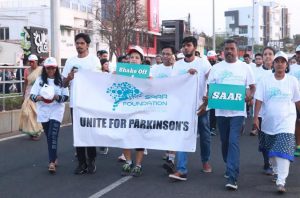 Shrilaxmi: What inspired you to start the SAAR Foundation?
Dr. Shanthipriya: When I was diagnosed, there was no support group—especially for early onset cases. I wanted to create something that I didn’t have. Now, people can call us, get guidance, and not feel so alone.
Shrilaxmi: How has the public responded to your initiatives like awareness walks and campaigns?
Dr. Shanthipriya: The response has been very positive. More people are aware now. It’s fulfilling to know that I’m helping others.
Shrilaxmi: You’re also involved in policy work with the government. Can you tell us more?
Dr. Shanthipriya: Yes, I’m an advisor for health and disability policies related to Parkinson’s. For example, during elections, I was consulted to help make EVMs more accessible for people with motor issues like tremors. We’re also working on improving public infrastructure to be more inclusive.
Shrilaxmi: That’s very impactful. Accessibility is often overlooked.
Dr. Shanthipriya: Yes, exactly. Even during my last election, I found the polling station completely inaccessible. These are things we want to change.

Shrilaxmi: And as a woman with Parkinson’s, are there specific challenges that we don’t really talk about?
Dr. Shanthipriya: The main thing is balancing your career, your family, and your health. And for women, the symptoms can fluctuate, especially with menstruation and hormonal cycles. Those symptoms can worsen during those times. That adds another layer of complexity. Women with Parkinson’s are also more prone to non-motor symptoms. Things like fatigue, depression, mental health challenges—they’re more common in women.
Shrilaxmi: But, most information online focuses only on motor symptoms.
Dr. Shanthipriya: Yes. Nobody talks about this. There’s no comprehensive healthcare model here. In the US and other countries, they have a team approach—Doctors, physiotherapists, mental health professionals.
Shrilaxmi: A multidisciplinary team.
Dr. Shanthipriya: Exactly. But here, we don’t have that. I’m not even talking about infrastructure. It’s more about when you go meet your neurologist, they don’t refer you to a mental health professional—like a psychologist or psychiatrist.
Shrilaxmi: Because of the stigma?
Dr. Shanthipriya: Yes. Especially when it comes to mental health.
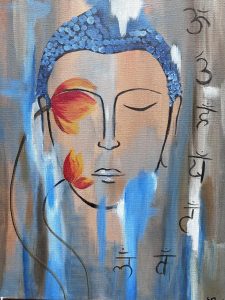
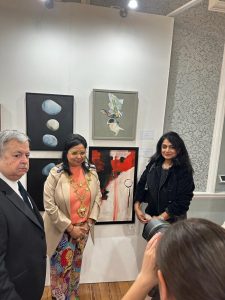
Shrilaxmi: I also saw you have an extensive art practice. That really stood out to me.
Dr. Shanthipriya: That was actually during the time I had my DBS. And then COVID hit, so there was a lot of time. I’m actually an abstract artist. I’m a self-taught artist and I paint my emotions.
Shrilaxmi: Has it been a good outlet for you?
Dr. Shanthipriya: Yes, definitely. Especially after DBS, there were two or three months of lockdown. That’s when I struggled with a lot of mental health issues. But painting helped me.
Shrilaxmi: And one final question, Doctor. For someone newly diagnosed with young-onset Parkinson’s, what words of encouragement would you share?
Dr. Shanthipriya: You have to just shake it off and move on. You have to get into that mind space as quickly as possible. Accepting it is difficult in the beginning—but you have to. Accept it and move on with life. I also feel it’s very important to keep yourself mentally and physically fit.
Shrilaxmi: And what would you say to caregivers?
Dr. Shanthipriya: Caregivers should be educated about the various stages of Parkinson’s—both motor and non-motor. They need to be more understanding. And because most caregivers are emotionally attached to the person, they should also take care of their own mental and physical health. Especially when it comes to supporting the patient through depression or anxiety.
About Dr. Shanthipriya Siva
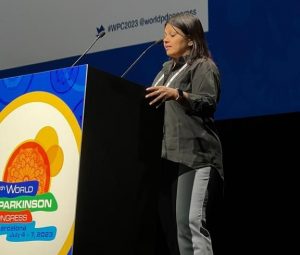
Dr. Shanthipriya Siva, based in Chennai, is a multifaceted professional encompassing roles as an artist, author, model, social worker, and motivational speaker. Her journey took a transformative turn in 2010 when, at the age of 35, she was diagnosed with Young-Onset Parkinson’s Disease (YOPD). Embracing her condition, Dr. Siva became a passionate advocate for awareness and support for those affected by Parkinson’s.
In April 2019, she founded the SAAR Foundation-an acronym for Support, Action, Awareness, Rehabilitation. The organization is dedicated to enhancing the quality of life for individuals with Parkinson’s through community engagement, education, and promoting active lifestyles. Dr. Siva’s commitment to the cause is further exemplified by her role as an Alumni Ambassador for the World Parkinson Coalition, where she contributes to
Beyond her medical and advocacy work, Dr. Shanthipriya is a self-taught artist whose creations have been showcased in inclusive art exhibitions, highlighting the talents of individuals with disabilities. Her artistic endeavors serve as a medium to challenge societal perceptions